


Macrolepiota sp
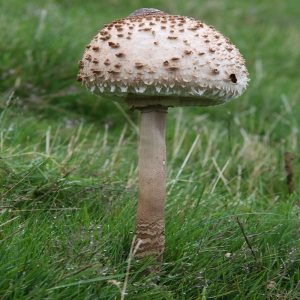
Macrolepiota is a genus of white spored, gilled mushrooms of the family Agaricaceae. The best-known member is the parasol mushroom (Macrolepiota procera). The widespread genus contains about 40 species.


Boletus sp
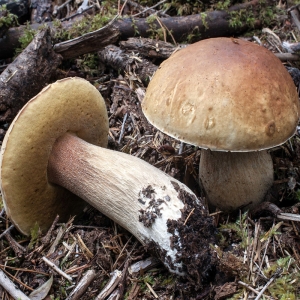
Boletus edulis (English: penny bun, cep, porcino or porcini) is a basidiomycete fungus, and the type species of the genus Boletus. The fungus grows in deciduous and coniferous forests and tree plantations, forming symbiotic ectomycorrhizal associations with living trees by enveloping the tree's underground roots with sheaths of fungal tissue. The fungus produces spore-bearing fruit bodies above ground in summer and autumn. The fruit body has a large brown cap which on occasion can reach 35 cm (14 in) in diameter and 3 kg (6.6 lb) in weight. Like other boletes, it has tubes extending downward from the underside of the cap, rather than gills; spores escape at maturity through the tube openings, or pores. The pore surface of the B. edulis fruit body is whitish when young, but ages to a greenish-yellow. The stout stipe, or stem, is white or yellowish in colour, up to 25 cm (10 in) tall and 10 cm (4 in) thick, and partially covered with a raised network pattern, or reticulations.
Fruition: May - July
| Availability | |
| Frozen | 20 € / Kg |


Craterellus Cornucopioides
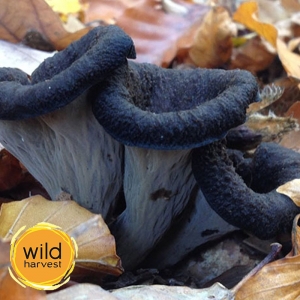
Craterellus cornucopioides or a different black trumpet, is a funnel-shaped mushroom, deep-like crater with a wavy perimeter, its diameter varies from 4-8 to the height of 4-10 cm. Its internal surface is slotted and has a color of black or dark gray.
The film, its outer surface, is gray, dull, smooth or less smooth, without puddles, but it may be somewhat wrinkled.
The leg is hollow, gray and slightly tapering towards the base.
His flesh is very thin, fragile, with a fragrant aroma and a mild flavor.


Morchella sp
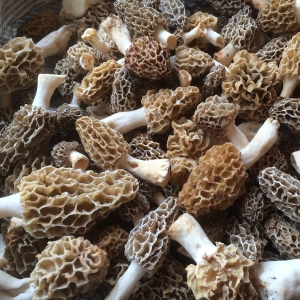
Morchella are an edible mushroom of great gastronomic value, appearing from March to May. There are many species and varieties in the genus Morchela, all of which are much more like edible mushrooms and most difficult to distinguish between them. Generally, the morchellas are cooked in many ways. It is good, before cooking, to rinse whole or shredded first with saline and then with cold cold water. In this way the mushrooms are cleaned of foreign matter, sand, dust etc, filling the pots of their hat. Eaten roasted or fried with butter and eggs, with fish, chicken and veal.
Fruition: February - May


Hydnum sp
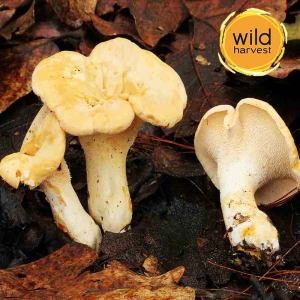
The Hydnum repandum, Ydno curved or Agathaki is a delicious edible mushroom. The Hydnum repandum fructify autumn and winter in broadleaf and coniferous forests, usually in large groups. The lower surface is soft or brittle whitish cream thorns. It grows in oak or fir or mixed forests and usually in groups. The foot has a height of 2 – 6 cm and is cylindrical, smooth and solid color with the same hat. The flesh is white and soft with a pleasant smell and smooth taste.


Craterellus Lutescens
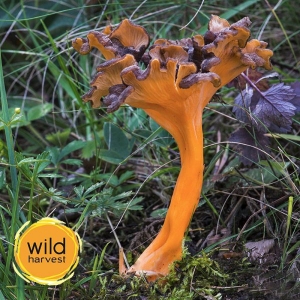
“Kanthariskos the rising” or different “Gold bitter orange” is a delicious wild mushroom with fruity flavor. The top of the hat is fibrous and is brown or orange-brown and the edge is wavy. The foot is hollow measuring 2-7 cm cylindrical and golden color. Odour flesh reminiscent of fruit (apricot) located in groups under arbutus up to catch the first frost.


Cantharellus sp

The Cantharellus cibarius, Kanthariskos the edible or kantharella is a very tasty mushroom It is prevalent species flourish in forests of broadleaf and conifer in wet locations and in large groups, in spring and autumn, is a common type of mushroom. His hat Cantharellus cibarius has undulating perimeter, with color pale yellow, yellow, saffron. The flesh is white-yellow fruit with a characteristic odor, apricot and nice spicy flavor.
Fruition: April - July


Morchella sp
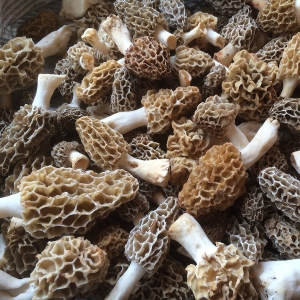
Morchella are an edible mushroom of great gastronomic value, appearing from March to May. There are many species and varieties in the genus Morchela, all of which are much more like edible mushrooms and most difficult to distinguish between them. Generally, the morchellas are cooked in many ways. It is good, before cooking, to rinse whole or shredded first with saline and then with cold cold water. In this way the mushrooms are cleaned of foreign matter, sand, dust etc, filling the pots of their hat. Eaten roasted or fried with butter and eggs, with fish, chicken and veal.
Fruition: February - May
Macrolepiota sp
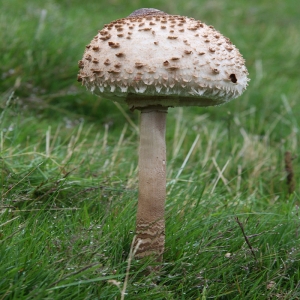
Macrolepiota is a genus of white spored, gilled mushrooms of the family Agaricaceae. The best-known member is the parasol mushroom (Macrolepiota procera). The widespread genus contains about 40 species.
Αγαρικό
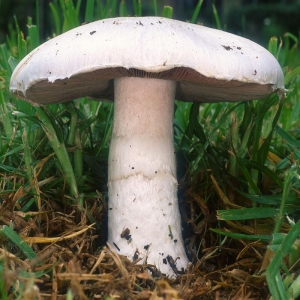
Agaricus is a genus of mushrooms containing both edible and poisonous species, with possibly over 300 members worldwide. The genus contains the most widely consumed and best-known mushroom today, A. bisporus, with A. campestris also being well known.
Members of Agaricus are characterized by having a fleshy cap or pileus, from the underside of which grow a number of radiating plates or gills on which are produced the naked spores. They are distinguished from other members of their family, Agaricaceae, by their chocolate-brown spores. Members of Agaricus also have a stem or stipe, which elevates it above the object on which the mushroom grows, or substrate, and a partial veil, which protects the developing gills and later forms a ring or annulus on the stalk.


